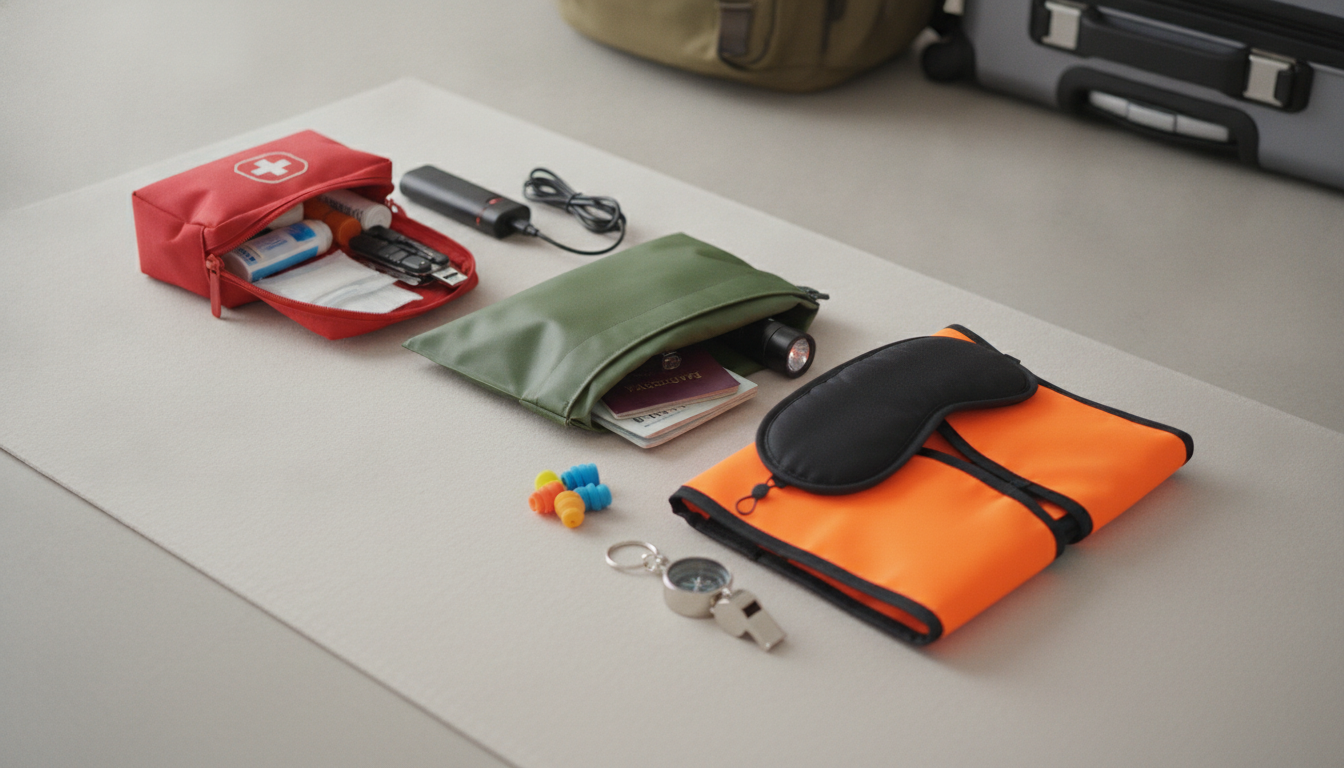
A solid 5-in-1 travel emergency bundle should cover the most common “trip-stoppers” with five compact modules: power, first aid, shelter/warmth, water/food, and communication/navigation. The goal is to handle a delay, breakdown, weather shift, or minor injury without turning it into a full-blown crisis.
Pack a high-capacity power bank (10,000–20,000 mAh), short charging cables (USB-C/Lightning), and a small headlamp or flashlight with spare batteries. A headlamp keeps both hands free during roadside fixes, hotel blackouts, or late-night airport hiccups.
Include adhesive bandages, gauze, antiseptic wipes, blister care, tweezers, and a small roll of medical tape. Add essentials like pain relievers, antihistamines, anti-diarrheal tablets, and any prescriptions in original labeled containers.
A compact emergency blanket or bivy, disposable poncho, and a pair of nitrile gloves cover cold rain, wind, and messy situations. In a car kit, add a reflective triangle or LED flare for visibility.
Carry a collapsible water pouch or bottle plus a small filter straw or purification tablets. Add shelf-stable snacks (protein bars, nuts) that won’t melt easily and can get you through a long delay.
Bring a whistle, a small notepad and pen, and a mini multi-tool (where legal—avoid in carry-on). Add duct tape strips (wrapped flat), zip ties, and a few cash bills in small denominations for taxis, tips, or card-reader outages.
For a complete system approach—especially for road trips and multi-day travel—see the full guide: https://elustrian.com/guide-travel-emergency-system-turn-disasters-into-minor-detours/.
Keep liquids under TSA limits, avoid blades and most tools in carry-on, and choose a headlamp over fuel-based items. Put anything questionable (like a multi-tool) in checked luggage or swap for travel-safe alternatives.


Leave a comment
You must be logged in to post a comment.