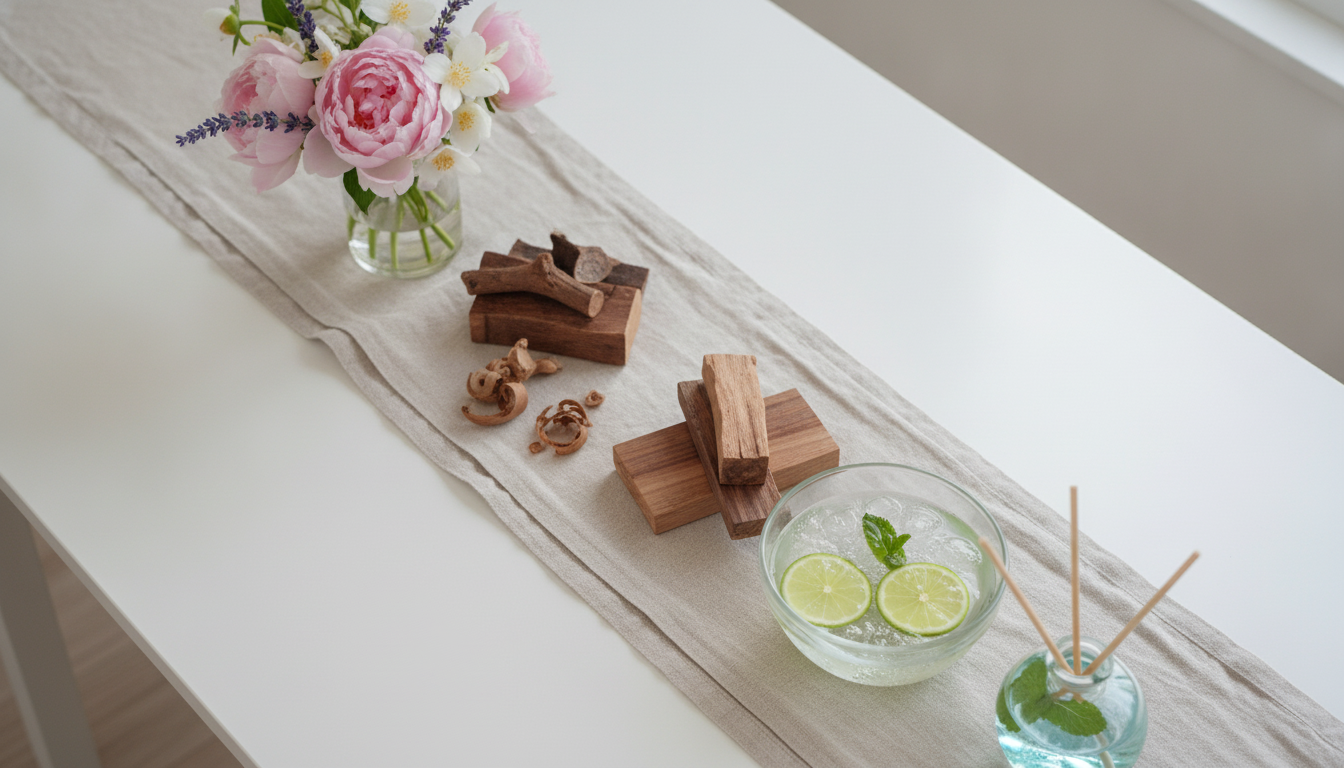
Most fragrances are built around a few “families” of scents that describe how a perfume smells overall. While individual notes can range from airy aldehydes to dense resins, these main categories help you quickly narrow down what you like and what you’ll actually wear. The most common fragrance families are floral, citrus, woody, oriental (amber), and fresh, with many perfumes blending two or more families for a balanced signature.
Floral scents are among the most popular and recognizable. They can be light and petal-soft (like lily-of-the-valley) or rich and heady (like tuberose). Citrus fragrances lean bright and sparkling, often featuring bergamot, lemon, grapefruit, or orange—great for an energizing, clean feel.
Woody fragrances feel warm, dry, and grounded. Notes like sandalwood, cedar, vetiver, and patchouli create an elegant, long-lasting base that can read smooth, smoky, or earthy. Oriental (often called amber) scents are deeper and more sensual, commonly built with vanilla, resins, spices, and balsams for a cozy, enveloping effect.
Fresh scents are a broad group that can include aquatic, green, aromatic, and soapy-clean profiles. Think crisp herbs, sea-breeze accords, or just-out-of-the-shower musks. These are often easy to wear and versatile across seasons.
For a more detailed breakdown of scent families and how they’re used in perfumery, visit the main guide on Elustrian.
For Main Fragrance Scent Families: Floral, Woody, Fresh, the best answer depends on fit, material, care instructions, and how the product will be used day to day.
Checking those details first helps avoid a poor match and keeps the choice practical after delivery.
For Main Fragrance Scent Families: Floral, Woody, Fresh, the best answer depends on fit, material, care instructions, and how the product will be used day to day.
Fragrance families describe the overall character (like floral or woody), while notes are the specific ingredients or accords you smell over time (top, heart, and base). A single perfume can contain dozens of notes but still fit neatly into one main family.






Leave a comment
You must be logged in to post a comment.