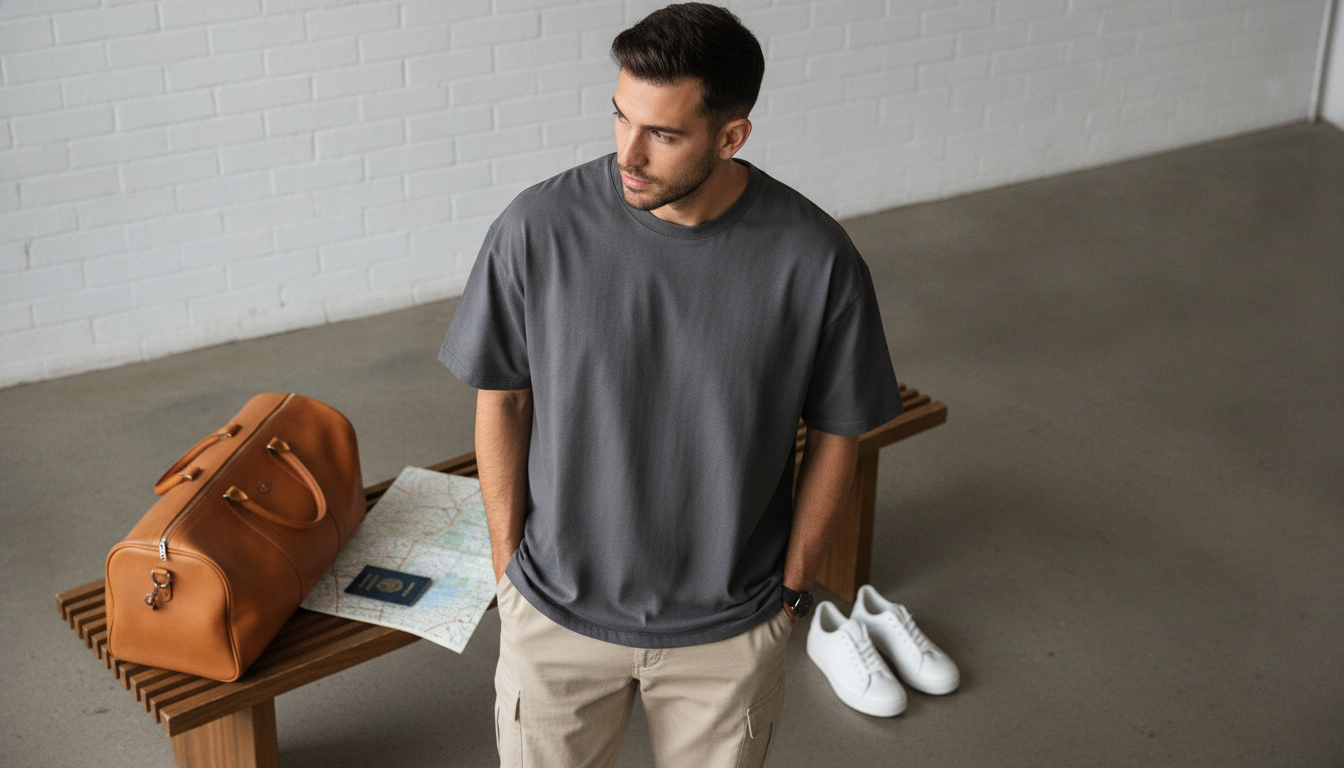
An oversized t-shirt should look intentionally roomy without looking sloppy. Aim for extra ease through the chest and shoulders, but keep the overall shape controlled so the shirt drapes cleanly and moves well.
The shoulder seam can sit slightly past your natural shoulder, but it shouldn’t drop so far that the sleeve looks like it’s hanging off your arm. Sleeves typically hit around mid-bicep to just above the elbow; wider sleeves are fine as long as they don’t swallow your arms completely.
You want noticeable extra room through the chest and torso—think a relaxed boxy drape rather than a tight fit. A good oversized tee won’t cling at the stomach or pull across the chest, and the side seams should still fall straight instead of twisting forward.
For most men, the sweet spot is a hem that lands around mid-zipper to a few inches below the belt line. Longer lengths can work, but if the tee reaches far past the seat it can look more like a tunic and throw off proportions—especially with slim pants.
A slightly higher crew neck often looks cleaner on an oversized silhouette, while wide or stretched collars can make the shirt feel worn-out fast. Heavier cotton (or a structured knit) helps the tee hold its shape; very thin fabric may cling and lose that “intentional” oversized look.
For detailed fit checkpoints and styling examples, see the full guide here: How should an oversized t-shirt fit men?
For Oversized T-Shirt Fit Guide for Men: Length, Shoulders, the best answer depends on fit, material, care instructions, and how the product will be used day to day.
Balance the volume with more fitted bottoms (straight, slim, or tapered) and keep one element structured, like a clean sneaker or jacket. A tidy neckline and a deliberate hem (full tuck or partial tuck) also makes the look feel intentional.





Leave a comment
You must be logged in to post a comment.