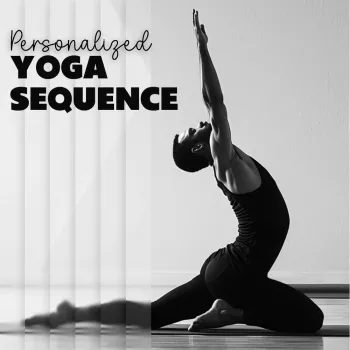
A consistent yoga routine gets easier when the sequence matches the day’s energy, the time you actually have, and what your body is asking for. The most sustainable home practice isn’t the longest or fanciest—it’s the one you can repeat safely, refine over time, and return to when life gets busy. Below is a practical way to generate a personalized flow with AI, then anchor it with a printable checklist so each session stays mindful, repeatable, and easier to progress.
Personalization starts with constraints: your time window, available space, experience level, and any areas that need extra care (hips, shoulders, or low back). Those constraints aren’t limitations—they’re the design brief that keeps your sequence realistic and supportive.
A useful sequence also has a clear arc: arrival (settling breath and attention) → warm-up → peak poses → cool-down → rest/meditation. That structure helps the nervous system downshift and helps tissues prepare before you load them.
Day-to-day variability matters. Soreness, stress, sleep, and energy shifts can change what feels appropriate. A “personalized” plan accounts for those shifts by offering a gentler option or a shorter minimum practice without scrapping the routine entirely.
Finally, personalized doesn’t have to mean complicated. Fewer poses practiced consistently—where you learn your alignment, breath rhythm, and transitions—often beats a long, random mix that changes every day.
AI is most useful when it’s given clear, concrete inputs. The more specific you are, the less likely you’ll get a generic list of poses that doesn’t match your body or your schedule.
If you’re managing recurring discomfort, it’s worth reviewing general health guidance from authoritative sources like NCCIH’s overview of yoga and being conservative about ranges of motion—especially on low-back sensitive days (see NIH NINDS information on back pain).
Ask for pose names, suggested timing, transitions, props, and a short breath cue for each section (arrival, warm-up, peak, cool-down, savasana). Including timing prevents “just one more pose” from crowding out rest.
Remove anything that conflicts with your limitations, and check that your warm-up genuinely prepares you for the peak work (for example: shoulders and wrists before arm-balance prep; hamstrings and hips before deeper forward folds). If you’re aiming for overall health consistency, broad movement guidelines like the Physical Activity Guidelines for Americans reinforce the value of repeatable, moderate activity over time.
| Goal | 10–15 min | 20–30 min | 40–60 min |
|---|---|---|---|
| Stress relief | Breath + gentle cat/cow + forward fold + legs up the wall | Add slow sun salutations, long exhales, supported hip opener, extended savasana | Include restorative holds (5–8 min each), guided body scan, longer meditation |
| Mobility | Joint circles + dynamic lunges + seated twist + supine stretch | Add targeted flows (hips/hamstrings/shoulders) + balance pose + longer cooldown | Include progressive ranges, longer holds, and a complete cool-down sequence |
| Strength | Warm-up + plank series + chair pose + short cool-down | Add standing sequence, core work, peak strength pose, counterposes | Include structured progressions, longer rests, and breath pacing for endurance |
| Beginner foundation | Breath + basic standing poses + gentle stretch | Add simple flow transitions + balance practice + clear cooldown | Include repetition for skill-building, longer savasana, and optional pranayama |
If you want a ready-to-use system for building and keeping your personalized flows, Flow Your Way: Personalized Yoga Sequence (AI tools + printable checklist) is designed to help you generate tailored sequences based on your time, goals, and preferences—and then organize them into a repeatable routine.
If you enjoy using AI to streamline planning in other areas too, you may also like the AI-Driven Content Ideas Toolkit: 4-in-1 Bundle of eBooks, Guides, and Checklists for Social Media Success as another structured, checklist-based way to reduce planning friction.
AI can be a helpful starting point, but treat the output as a draft: review it for your limitations, balanced sequencing, and realistic progressions. If you have an injury, medical concerns, or persistent pain, consult a qualified instructor or clinician before following new sequences.
Include minutes available, intensity level, primary goal, focus areas, experience level, props you have, and any boundaries (wrist/knee/back considerations, pregnancy, or movements to avoid). The clearer the inputs, the more usable the sequence will feel.
Keep a core routine for about 2–4 weeks so your body can adapt and you can measure progress, then refine. Make small day-to-day adjustments (hold times, fewer vinyasas, gentler variations) based on energy, stress, and recovery.






Leave a comment
You must be logged in to post a comment.