High-Pressure Airless Paint Spray Gun & Hose Kit with Extension Rod: Faster Coverage, Better Reach
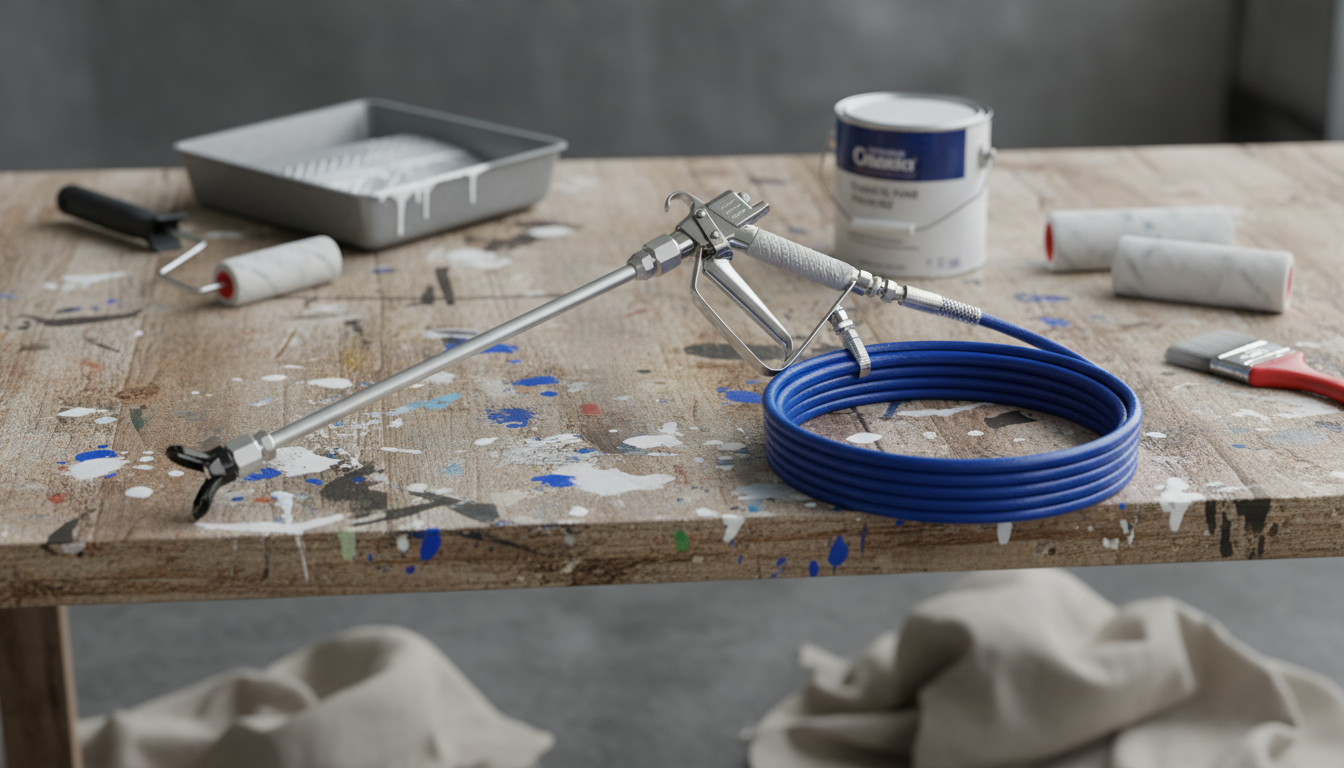
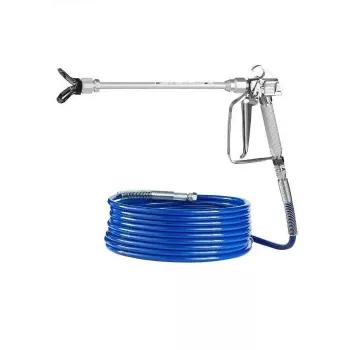
A high-pressure airless spray setup can speed up large paint jobs and improve coverage on broad surfaces. This kit combines a spray gun, hose, and extension rod to help reach ceilings, soffits, eaves, and tall walls with fewer ladders and less repositioning. For crews and DIYers who want cleaner, more consistent results on big surfaces, a well-matched gun, hose, and rod can make the workflow feel more controlled from the first pass to final touchups.
What this kit is designed to do
- Deliver paint and coatings at high pressure for fast, even application on large areas
- Reduce rolling and brushing time on walls, fences, siding, decks, and similar surfaces
- Improve reach and control for overhead work using the extension rod
- Support consistent spray patterns when paired with a compatible airless pump and tip
If you’re upgrading from brush-and-roll on a larger job, the biggest practical benefit is uniform coverage over wide spans—especially when you can keep the gun distance and speed steady.
Featured in-stock item
For a ready-to-connect setup, see the High Pressure Airless Paint Spray Gun & Hose Kit with Extension Rod (in stock).
Kit components at a glance
Each part plays a specific role in keeping flow stable, patterns predictable, and connections leak-free:
- Spray gun: trigger control for starting/stopping flow and managing overspray
- High-pressure hose: carries coating from pump to gun; length affects reach and pressure drop
- Extension rod: increases working distance for ceilings and high walls; helps reduce fatigue
- Connection points: fittings must match the pump and gun threads and be rated for pressure
Components and what to check before spraying
| Component |
Purpose |
What to verify before use |
| Spray gun |
Controls flow at the nozzle |
Trigger movement is smooth; filter/guard (if included) is seated; no leaks at inlet |
| High-pressure hose |
Transfers coating from pump to gun |
No cuts/kinks; fittings tighten fully; pressure rating meets or exceeds pump output |
| Extension rod |
Adds reach for high/overhead areas |
Threads seal properly; length is comfortable; no wobble at joints |
| Fittings/threads |
Connects pump–hose–gun–rod |
Correct thread type; use appropriate seal method; do not cross-thread |
Where an extension rod makes the biggest difference
- Ceilings and overhead drywall: maintain a steadier wrist angle and avoid constant ladder moves
- Soffits, fascia, and eaves: reach from a safer stance and keep a consistent spray distance
- Tall interior walls and stairwells: reduce stretching and improve uniformity at the top edge
- Back-rolling workflows: spray a section, then back-roll while it’s wet with less downtime
A practical rule: the higher the surface and the longer the run, the more the extension rod pays off by keeping your body position stable and your spray fan consistent.
Compatibility checklist before buying or connecting
- Pump rating: hose and gun must be rated for the maximum pressure the pump can deliver
- Coating type: thicker coatings may require larger tips and adequate pump output
- Thread/fitting match: confirm the connection standard between pump outlet, hose ends, gun inlet, and extension rod
- Tip and guard: ensure the gun accepts the tip/guard style used for the intended spray tips
- Hose length: longer hoses add convenience but can reduce pressure at the gun if the pump is undersized
If you’re uncertain about thread types, confirm both the pump outlet and the gun inlet specifications before you buy or attempt to adapt fittings. Mismatched threads can leak, strip, or fail under load.
Basic setup steps for a clean first spray
- Protect the area: mask edges, cover floors, and plan airflow to move overspray away from finished surfaces
- Strain and mix coating: remove debris that can clog tips and filters; follow coating manufacturer instructions
- Prime the system: circulate coating per pump procedure to purge air and stabilize flow
- Attach hose and gun: tighten fittings securely; avoid overtightening that can damage threads
- Test pattern on cardboard: adjust pressure and tip choice until the fan is even with minimal tails
Taking a minute to test the fan pattern is often the difference between a smooth first coat and a stop-and-start day of tip cleaning.
Technique tips for smoother coverage
Cleaning and storage to prevent clogs and leaks
Common issues and quick checks
Safety essentials for airless spraying
For additional guidance on spray finishing safety, see OSHA’s spray finishing standard and respirator selection basics from NIOSH. For consumer-oriented considerations around coatings, consult the EPA Safer Choice program.
More in-stock resources
FAQ
Will this hose and spray gun kit work with any airless paint sprayer?
Compatibility depends on the maximum pressure rating of the hose and gun and whether the thread types match your pump outlet and gun/rod connections. Confirm your sprayer’s max PSI and fitting standards before connecting.
What is the advantage of using an extension rod for airless spraying?
An extension rod helps you reach ceilings and tall walls with fewer ladder moves while keeping a steadier spray distance. It can also reduce fatigue during overhead work by improving posture and control.
How often should the spray tip and filters be cleaned or replaced?
Clean tips and filters after each spraying session and anytime the spray pattern starts to degrade. Replace them when wear, repeated clogs, or an inconsistent fan persists even after thorough cleaning.
Recommended for you





Leave a comment
You must be logged in to post a comment.